RCS_Xpress
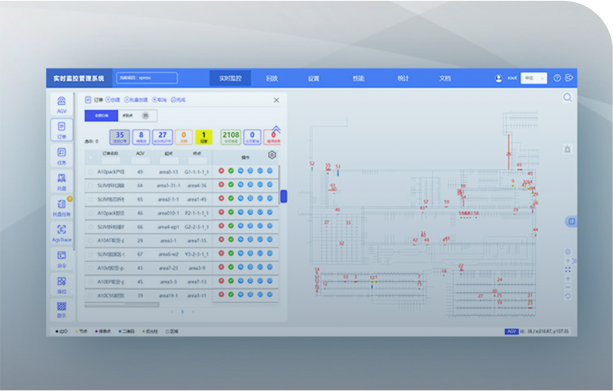
The RCS-Xpress Scheduling System interfaces with upstream business software systems and converts production tasks into robot dispatching tasks. Through fleet management, traffic management, task assignment, idle-time management, charging management, and coordinated scheduling of logistics robot fleets, it enables automated and intelligent logistics operations.
Compatible with
All Vehicle Types
Unmanned
Operations
Safe and
Stable
Lower Costs and
Improve Efficiency
Business Software: Easy to Configure, Easy to Commission

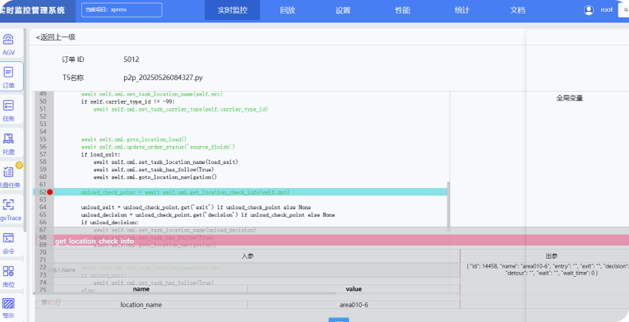
RCS-Xpress 2.0 is preconfigured with more than 100 commonly used functional modules, making business software easy to develop through its development platform.

The system provides visual configuration and commissioning interfaces, making business software easy to commission and enabling rapid responses to changes in customer workflows.

On-site project engineers can rapidly complete custom development, commissioning, and deployment, shortening implementation and commissioning cycles by 40%.

Mixed-Fleet Scheduling for Multiple Robot Types

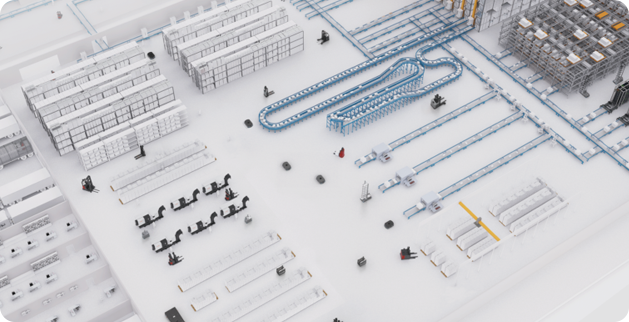
RCS-Xpress 2.0 supports mixed-fleet scheduling and coordinated operation of multiple robot types across the full product range.

This avoids assigning over-capable equipment to simple tasks or under-capable equipment to demanding tasks, effectively shortening material handling cycles.

It rapidly meets the multi-process, multi-category, and highly flexible requirements of modern manufacturing and logistics.

AI Algorithms for Efficient Decision-Making

Globally Optimal Fleet Scheduling Algorithm: Supports real-time task scheduling for more than 2,000 AGVs of multiple types at a single site and accurately assigns each task to an individual AGV within one second.

Configuration-Free Multi-Vehicle Traffic Planning Algorithm: Supports route planning and traffic management for more than 2,000 AGVs of multiple types across sites larger than 100,000 m², improving efficiency by more than 30% compared with single-agent path-planning algorithms.

Triple-Layer Protection to Prevent Production Accidents

High-Reliability Design: Independent and robust software modules prevent software failures at the architectural level.

Comprehensive Monitoring and Early Warning: A dedicated monitoring module comprehensively monitors software operation.

Disaster Recovery, Backup, and Rapid Recovery: The system withstands disruptions caused by external conditions or hardware failures and supports immediate failover and rapid recovery..